Prime Auto Pro

Brake Pads and Disc Rotors Replacement

Of all the systems in your car, none asks for your trust quite like the brakes. Pads and disc rotors are the parts that actually convert speed into a safe stop, and they wear away a little with every press of the pedal. When they thin out, your stopping power fades, and the risk climbs. Our brake pads and disc rotors replacement restores that crucial bite, fitting quality parts so your car stops short, straight, and quietly, exactly as it should.
Prime Auto Pro

How Your Brakes Stop the Car

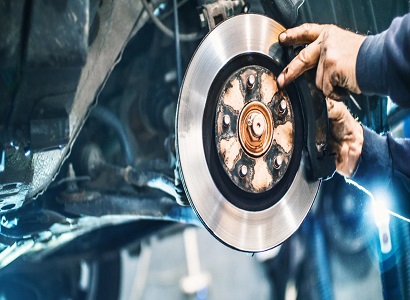
Understanding why pads and rotors need replacing starts with grasping how they stop a moving car in the first place. Your brakes work by turning motion into heat through friction. When you press the pedal, hydraulic pressure squeezes the brake pads against a spinning metal disc, the rotor, attached to each wheel. The harder the pads clamp the rotor, the more the wheel slows, and the energy of the moving car is shed as heat into the metal and air. This is a deliberately sacrificial arrangement.
 
The pads are made of friction material designed to wear down gradually so they grip rather than glide, making them consumable by nature and requiring eventual replacement. The rotors, though far more durable, are not permanent either, slowly losing thickness as the pads wear them down. Both are wear items, and recognising that is the key to keeping your braking safe and reliable over the life of the car.
Prime Auto Pro

Pads, Rotors, or Both?

A common question is whether pads and rotors must always be replaced together, and the honest answer is that it depends on their condition. Pads wear faster than rotors because they are the softer, sacrificial part, so it is normal to replace pads more often, while rotors last through more than one set. However, the two are intimately linked. Worn pads that have been run too far can score and gouge the rotor surface, and a rotor that has thinned beyond its safe limit or developed grooves cannot give fresh pads a smooth, even surface to grip.
 
When that happens, fitting new pads to damaged rotors simply wastes them, producing noise, vibration, and poor braking. Rotors also have a minimum thickness specification, below which they cannot safely dissipate heat and must be replaced rather than reused. Judging the true condition of both, rather than assuming, is what determines whether you need pads, rotors, or both.
Prime Auto Pro

Symptoms You Should Never Ignore

Brakes give plenty of warning before they become dangerous, provided you know how to listen and feel for the signs. A high-pitched squeal when braking is often the result of a small wear indicator built into the pad, designed to screech when the material is running low and demand your attention. If that is ignored, the sound can progress to a harsh grinding, which usually means the pad is gone and metal is now contacting the rotor, causing rapid damage.
 
A pulsing or vibrating brake pedal under braking typically indicates warped or unevenly worn rotors. You may also notice the car pulling to one side when stopping, a soft or spongy pedal, or simply that it takes longer to come to a halt than it used to. Any burning smell after braking hard is another red flag. Because brakes are pure safety, none of these signs should ever be left to worsen.
Our Services

Quality Repair Services

What a Proper Brake Job Involves

Honest Assessment First

Brake replacement is a job where the difference between adequate and excellent is measured in your safety, so it deserves more than a rushed part swap. Rather than a generic step list, it helps to understand the judgement and care that a proper brake job involves, because that is what separates work you can rely on from a quick fit that disappoints within weeks. Everything begins with assessment, because brakes cannot be fixed sensibly without first knowing the true state of every part. The wheels come off, and the pads are measured for remaining material; the rotors are examined for grooving and scoring, and their thickness is measured against the manufacturer’s minimum. This is where the genuine decision is made about what actually needs replacing. There is no value in renewing parts that are still serviceable, nor in fitting fresh pads to rotors that are too far gone to support them. An honest look at the hardware dictates the right course.

Matching the Right Parts

Choosing the correct parts comes next, and it matters more than many realise. Brake pads come in different friction materials, each with its own balance of bite, noise, dust, and longevity, and the right choice depends on how and where the vehicle is driven. Rotors must likewise match the vehicle’s specifications. Fitting parts suited to the car, rather than simply the cheapest available, is what delivers braking that feels right and lasts.

Fitting With Care

The fitting itself rewards attention to detail. Old pads and, where needed, rotors are removed, and the mounting surfaces are cleaned so new rotors seat perfectly flat, since even a little debris can cause vibration. The caliper, the component that houses the pads and presses them onto the rotor, is inspected to confirm it moves freely, because a sticking caliper will wear the new pads unevenly and undo the whole job. Guide pins are cleaned and lubricated appropriately, and everything is reassembled and torqued to specification so nothing is loose or over-tightened.

Bedding In and Testing

A step that is easy to overlook but genuinely important is the bedding in of new brakes. Fresh pads and rotors require a controlled sequence of stops to evenly apply friction material and allow the surfaces to mate properly. Skipping this can leave brakes that judder or never reach their full potential, so a proper job accounts for it. Finally, the brakes are tested to confirm they stop the car straight, firmly, and quietly, with a pedal that feels solid underfoot. Only then is the work truly complete. Understanding all of this shows why brake replacement is not a place to chase the lowest price or the fastest turnaround. It is the system that keeps you and everyone around you safe. If your brakes are squealing, grinding, vibrating, or simply not stopping the way they once did, treat it as the priority it deserves to be and have them attended to without delay.

FAQs

Listen for a high-pitched squeal when braking; it is often a built-in wear indicator that tells you the pads are low. Grinding suggests they are already gone. A longer stopping distance, a vibrating pedal, or a warning light are further clues. If you notice any of these, have the brakes checked promptly, as they are purely safety-related.
Not always. Pads wear faster and are usually replaced more often, with rotors lasting through more than one set. But if the rotors are grooved, warped, or worn below their minimum thickness, they must be replaced too, because fitting new pads to bad rotors causes noise, vibration, and poor braking. Their actual condition decides.
A squeal is frequently the wear indicator on the pad doing its job, signalling the material is running low. Grinding is more serious and usually indicates the pad is worn out, with metal contacting the rotor, which can quickly damage it. Either way, the noise is a clear prompt to have the brakes inspected without waiting.
It is genuinely risky and best avoided. Worn brakes lengthen your stopping distance and can fail when you least expect them. Driving on pads that are completely gone lets metal chew into the rotors, turning a modest pad replacement into a far costlier rotor job. For safety and cost alike, worn brakes deserve prompt attention.
Fresh pads and rotors need a sequence of controlled stops to evenly apply friction material and allow the surfaces to mate properly. This bedding-in process allows the brakes to perform to their full potential and prevents juddering. Skipping it can leave new brakes feeling rough or weak, which is why a proper job is necessary.