Prime Auto Pro

Computer Diagnostics

When a warning light appears on your dashboard, your car is trying to tell you something, but it speaks in code. Computer diagnostics is how we translate that language, plugging into your vehicle’s onboard systems to read what its sensors and modules are reporting. Far more than simply reading a fault code, proper diagnostics interprets the data to find the actual cause rather than the symptom. We use professional scanning equipment and the expertise to make sense of it, so guesswork never drives your repair bill.
Prime Auto Pro

What Computer Diagnostics Is

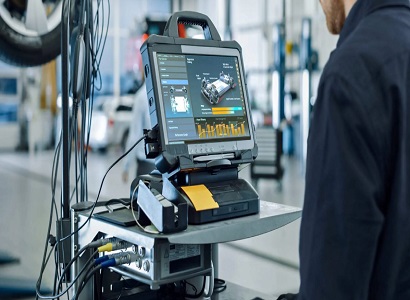
Every modern car is run by a network of small computers, often called modules, that constantly monitor and control the engine, transmission, braking, emissions, and dozens of other functions. These modules communicate with each other and with a multitude of sensors, and when something deviates from expected parameters, the system records a fault. Computer diagnostics is the process of connecting specialised equipment to this network, usually through a standard port beneath the dashboard, and retrieving the information stored inside.
 
The scanner pulls out trouble codes, live sensor readings, and a snapshot of conditions at the moment a fault occurred. This is the same fundamental technology across most vehicles built in recent decades, which is why a check engine light can be investigated rather than simply ignored or feared. The real value, though, lies not in the connection itself but in understanding what the retrieved data actually means for your particular car and its symptoms.
Prime Auto Pro

The Misconception About Scanners

There is a widespread belief that plugging in a scanner instantly reveals exactly what is wrong, as though the car announces its own broken part. The reality is more nuanced, and understanding it explains why skilled diagnostics matters. A trouble code does not name the faulty component; it describes the circuit or system where the computer detected an abnormality. A code pointing to a particular oxygen sensor reading, for instance, might stem from the sensor itself, but equally from wiring, a vacuum leak, or a fault elsewhere that throws that reading off.
 
Blindly replacing the part named in the code is how people end up paying for components that were never broken while the real problem persists. Genuine diagnosis uses the code as a starting clue, then combines it with live data, physical inspection, and knowledge of how that system works to confirm the true cause. The scanner gathers evidence, but a person solves the case.
Prime Auto Pro

When You Need a Diagnostic

Diagnostics earns its keep in a range of situations beyond the obvious illuminated warning light. The most familiar trigger is the check engine light glowing on the dashboard, which can signal anything from a loose fuel cap to a developing engine fault, and only a scan reveals which. Flashing or multiple warning lights require urgent attention, as they often indicate a more serious issue.
 
Diagnostics is equally valuable when a car develops a symptom without any light at all, such as rough idling, hesitation, poor fuel economy, hard starting, or odd shifting, since the underlying data often holds clues the symptom alone cannot give. It is also a smart move before buying a used car, as a scan can reveal hidden faults a seller may not mention. Even after a repair, a scan confirms the fault has genuinely cleared rather than lurking quietly. Whenever a car behaves oddly, diagnostics turns confusion into direction.
Our Services

Quality Repair Services

How a Fault Is Actually Traced

It Starts With the Story

It is tempting to imagine computer diagnostics as a single moment, plug in, read the screen, done, but treating it that way is exactly how misdiagnoses happen. Rather than a mechanical checklist, what follows is the logic for tracing a fault from a flashing light to a confirmed cause, because seeing that logic explains why thorough diagnostics is worth more than a free code read at a parts counter. The starting point is always the story, not the scanner. Before anything is plugged in, the symptoms matter enormously. When does the problem appear? Is it cold or warm, under load or idling, intermittent or constant? These details shape where the investigation looks, because the same trouble code can mean different things depending on how and when the car misbehaves. A code read in isolation, stripped of this context, loses much of its usefulness.

Reading the Evidence

Only then is the scanner connected, and what it retrieves is treated as evidence rather than a verdict. The stored trouble codes indicate which systems flagged a problem, but just as important are the live data streams, the real-time readings from sensors as the engine runs. A skilled eye watches these values for anything that does not add up, a sensor reporting an impossible figure, a reading that lags or spikes, a value that drifts when it should hold steady. Freeze frame data, the snapshot captured when the fault first triggered, adds another layer, showing the exact conditions at the moment things went wrong.

Interpreting and Testing

With this evidence gathered, the work shifts to interpretation and testing, which is where genuine diagnosis lives. A code suggesting a lean fuel mixture, for example, opens several possibilities, and each must be weighed against the live data and the symptoms before reaching for a wrench. This often means physical checks, inspecting wiring and connectors, testing components directly, and looking for leaks or damage that the computer cannot see. The aim is to confirm the cause beyond a reasonable doubt, not to guess from the code alone and hope. This careful approach is precisely what protects you from paying for parts you do not need. Replacing a component because its name appears in code, without verifying that it is actually at fault, is the costly mistake proper diagnostics is designed to prevent. By tracing the problem to its root, the repair that follows addresses the real issue the first time.

Confirming the Fix

Once the cause is confirmed and the repair carried out, a final scan verifies the fault has cleared and stays cleared after the car is driven, ensuring the warning will not simply return down the road. Understanding this process helps you see why a thorough diagnostic is an investment rather than an expense. If a warning light has appeared or your car is behaving strangely, having it properly diagnosed is the surest way to fix the right thing once, instead of chasing symptoms and replacing parts in the dark.

FAQs

Not necessarily. A check engine light can be triggered by something as minor as a loose fuel cap or as serious as a misfire damaging the catalytic converter. The light alone cannot tell you which. A flashing light usually signals something more urgent. Diagnostics is the only reliable way to know how concerned you should actually be.
A basic code reader tells you which system flagged a fault, but not why. The code is a clue, not a diagnosis, and acting on it alone often leads to replacing parts that were never broken. Professional diagnostics interprets the code alongside live data, freeze-frame information, and physical testing to confirm the true cause.
Yes, in many cases. Symptoms such as rough idling, hesitation, poor fuel economy, or hard starting can be investigated through live sensor data even when no light is showing. The computer monitors far more than it flags as a fault, so a scan often reveals useful clues that a symptom on its own cannot.
Retrieving codes takes only minutes, but a genuine diagnosis takes longer because the codes must be interpreted, live data must be observed, and components must be tested to confirm the true cause. A straightforward fault can be quickly pinpointed, while an intermittent or complex one may take longer. Proper diagnosis is about accuracy rather than speed.
No. Clearing a code only temporarily switches off the warning light; it does nothing about the underlying fault. If the problem persists, the computer will detect it again, and the light will return. Clearing codes without addressing the cause simply hides the symptom and can mask a fault that is quietly worsening.